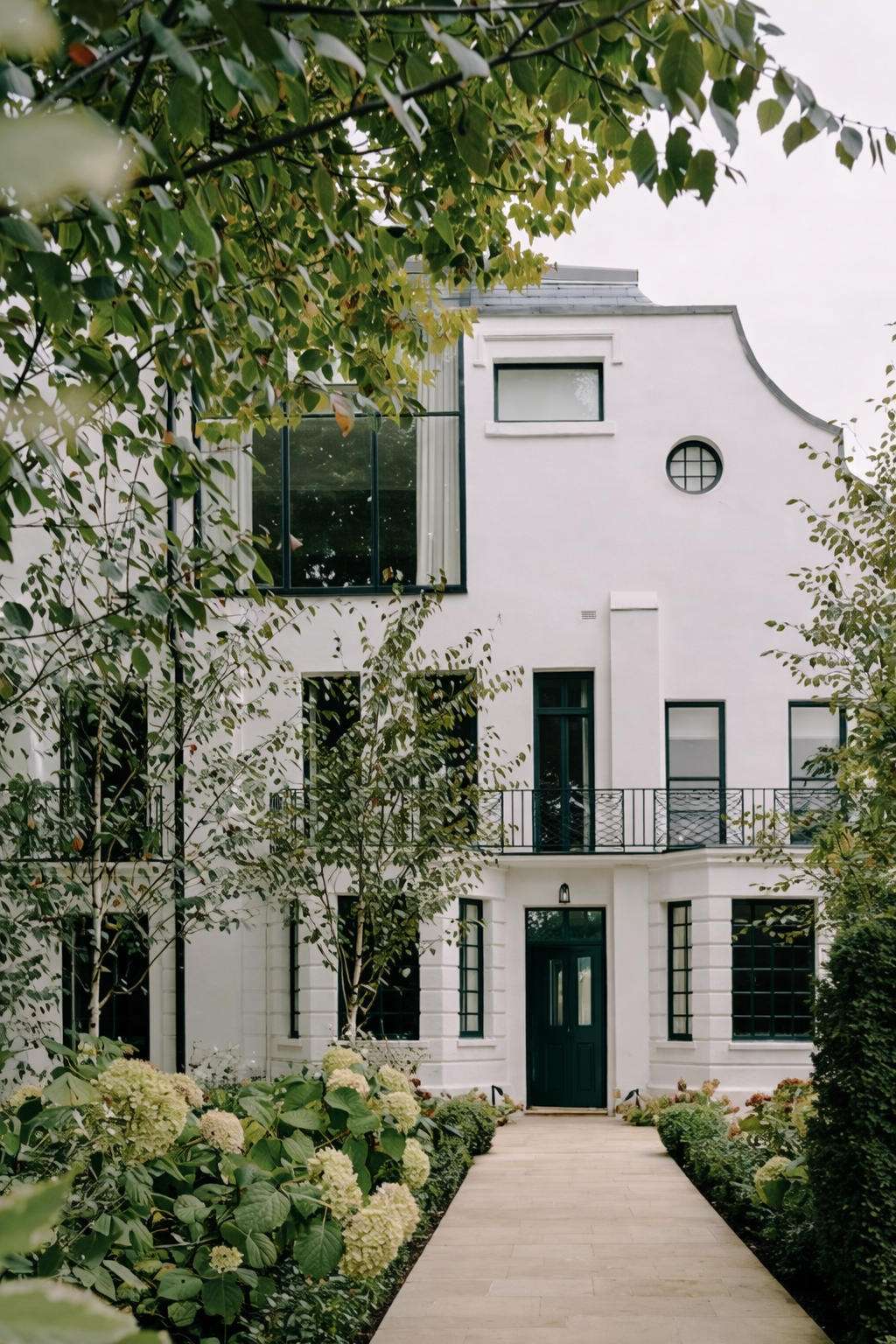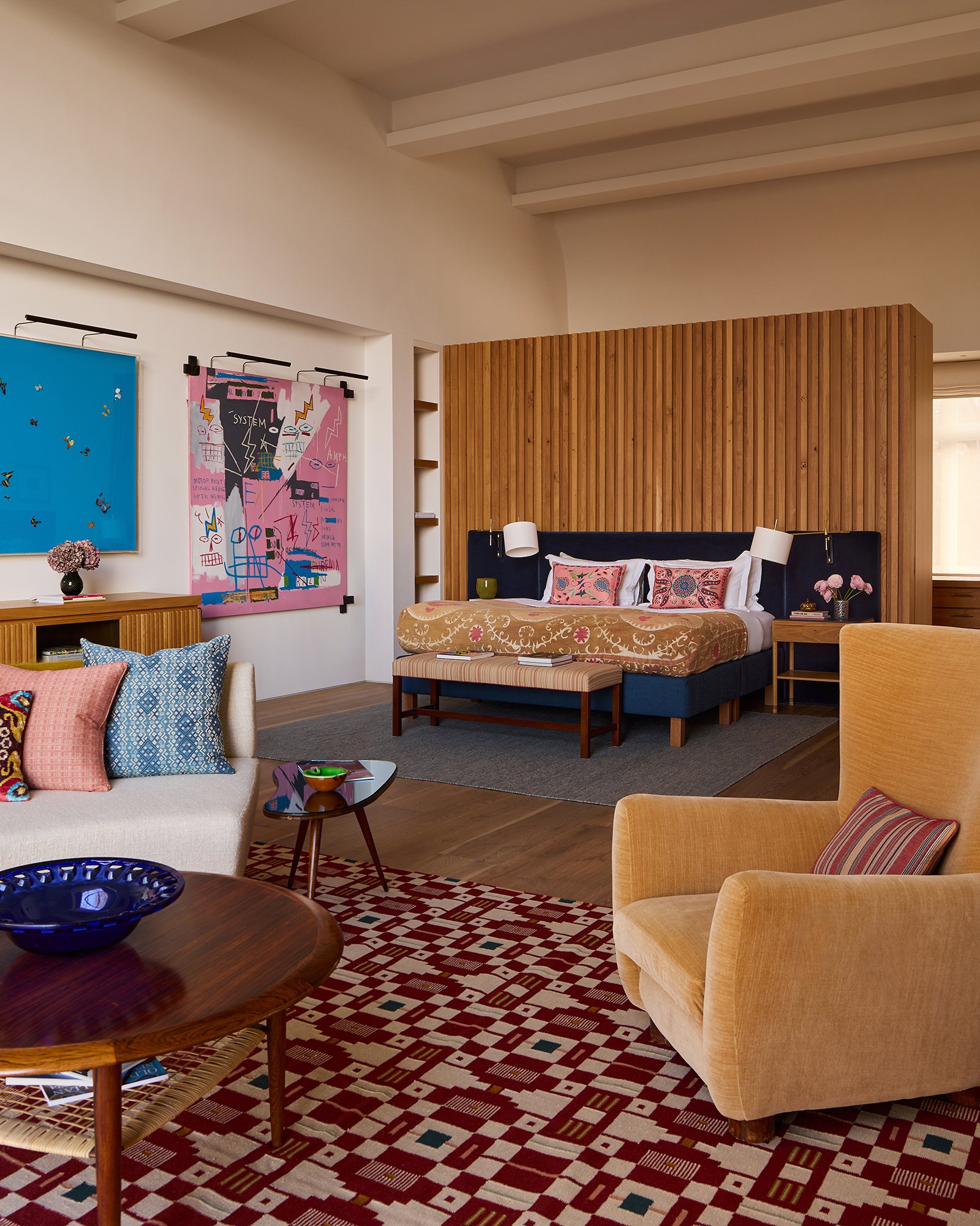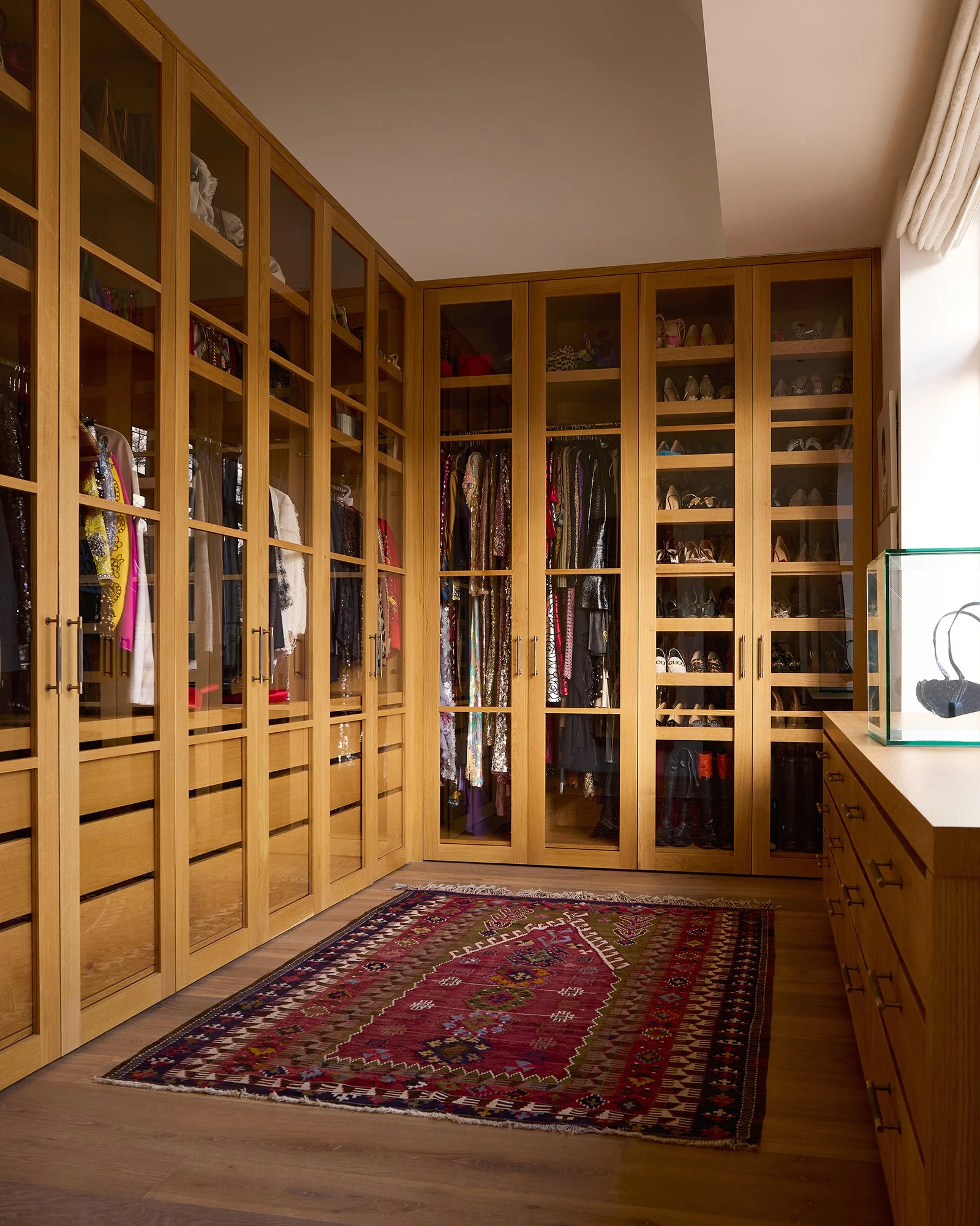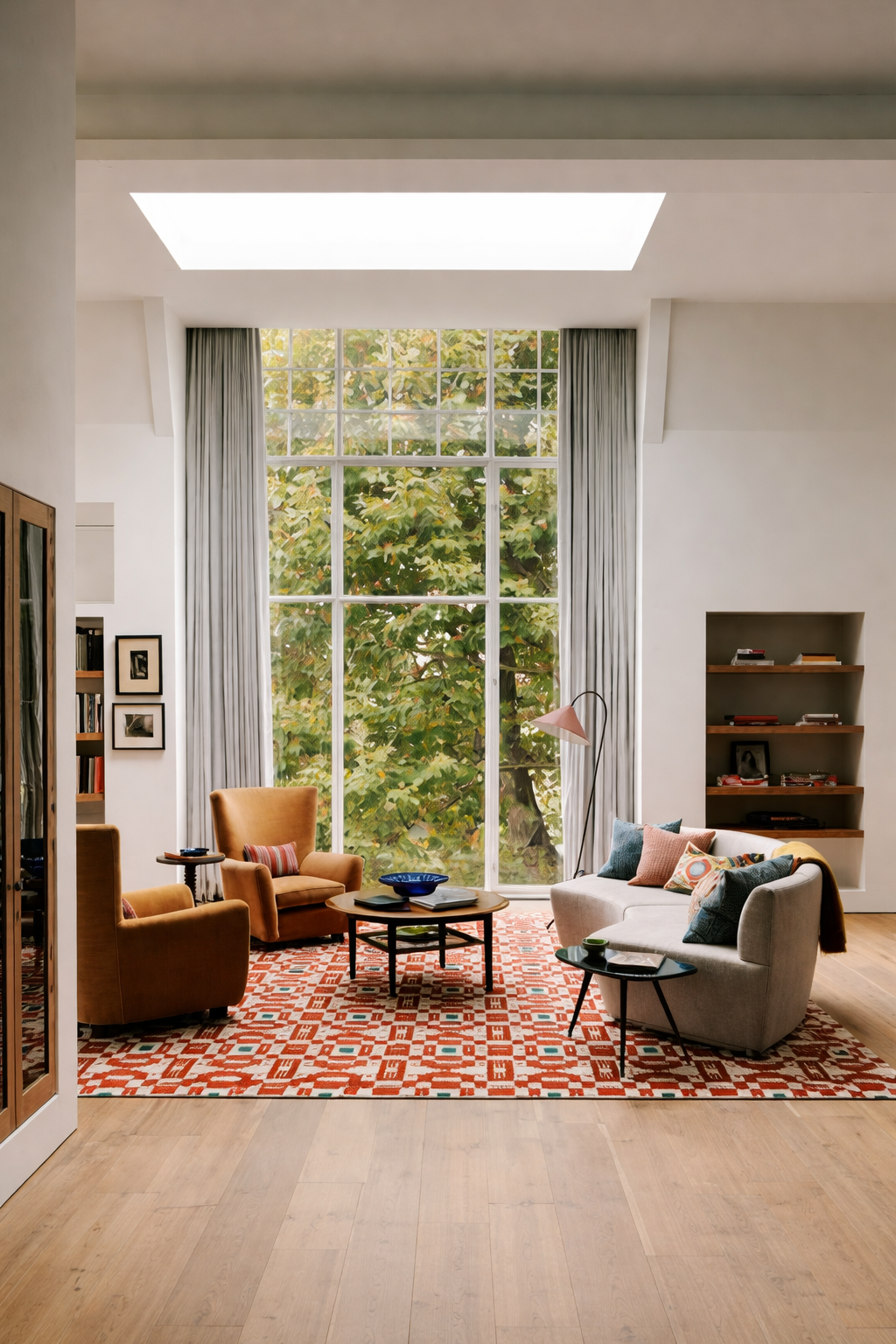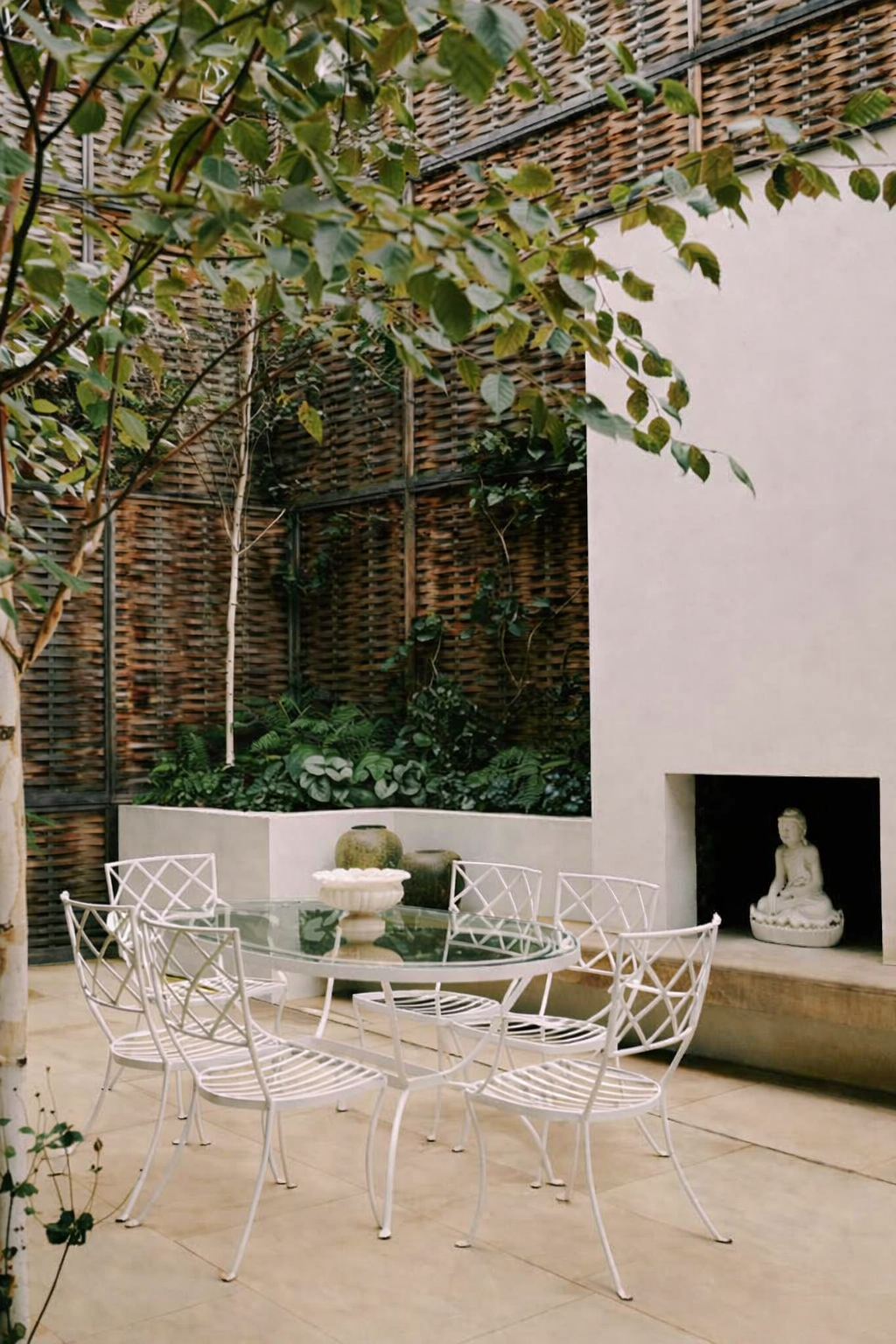
Following our initial refurbishment of this Grade II listed Georgian house, we were invited to further develop the interiors, refining the architectural framework to better accommodate the client’s evolving art collection and way of living.
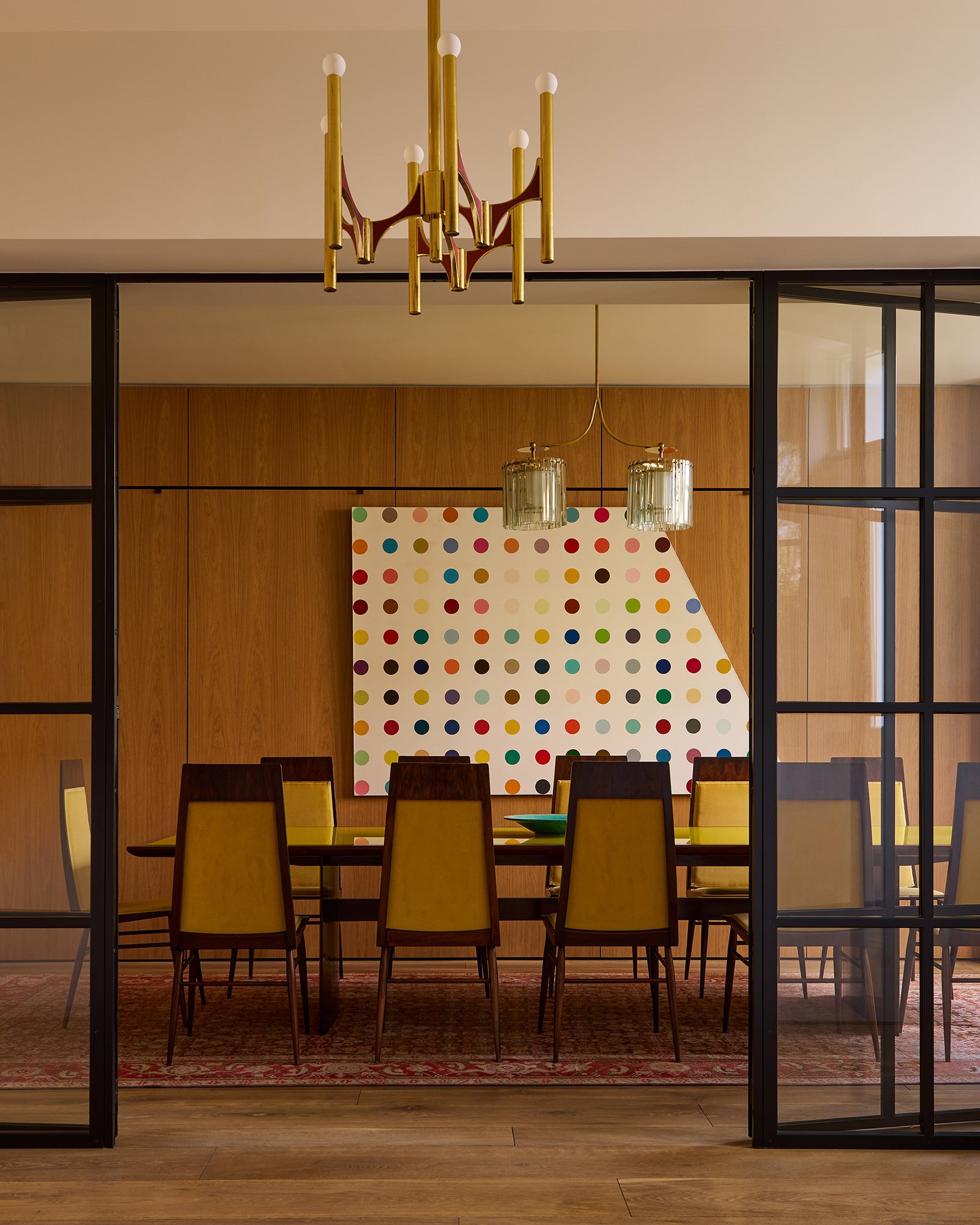
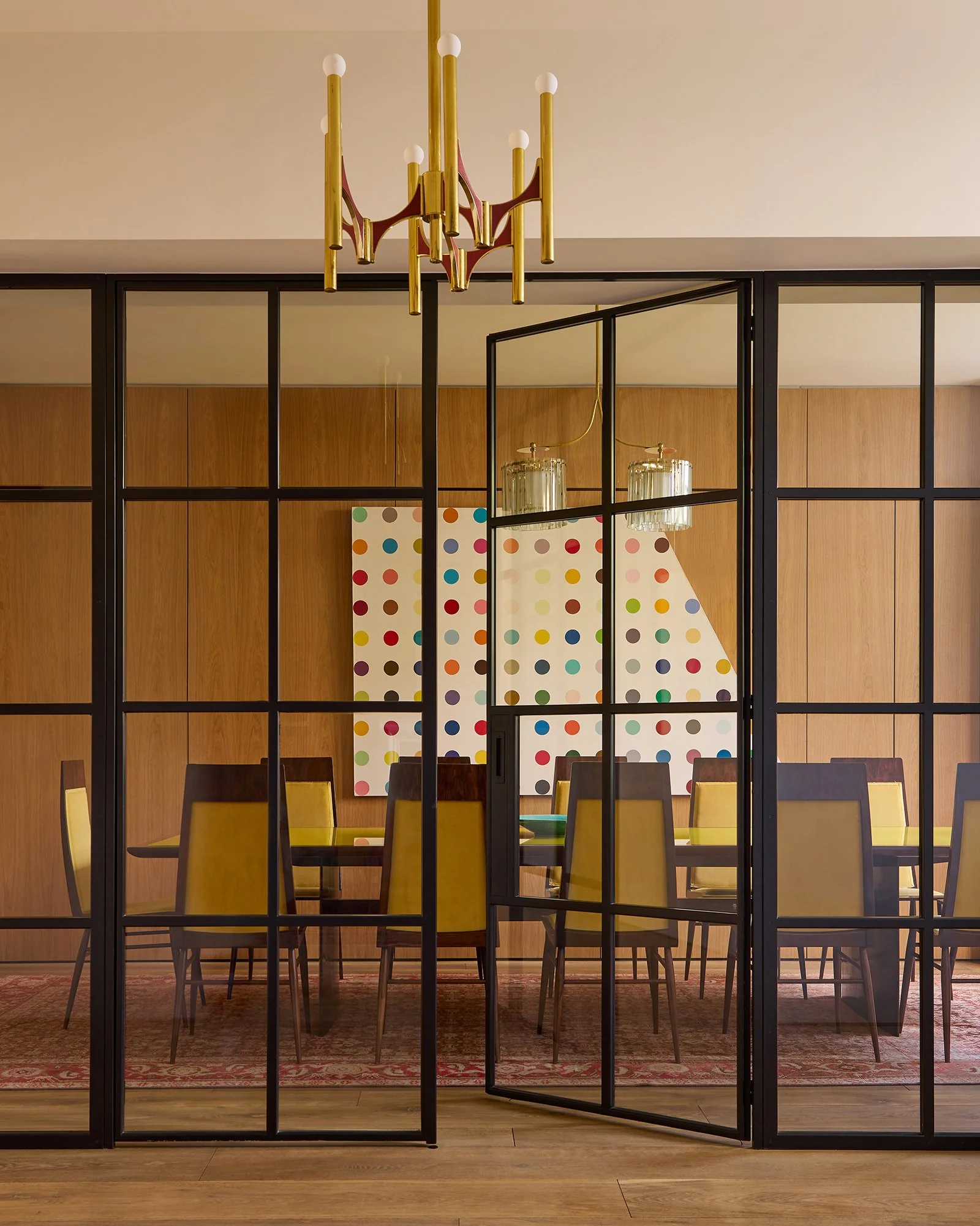
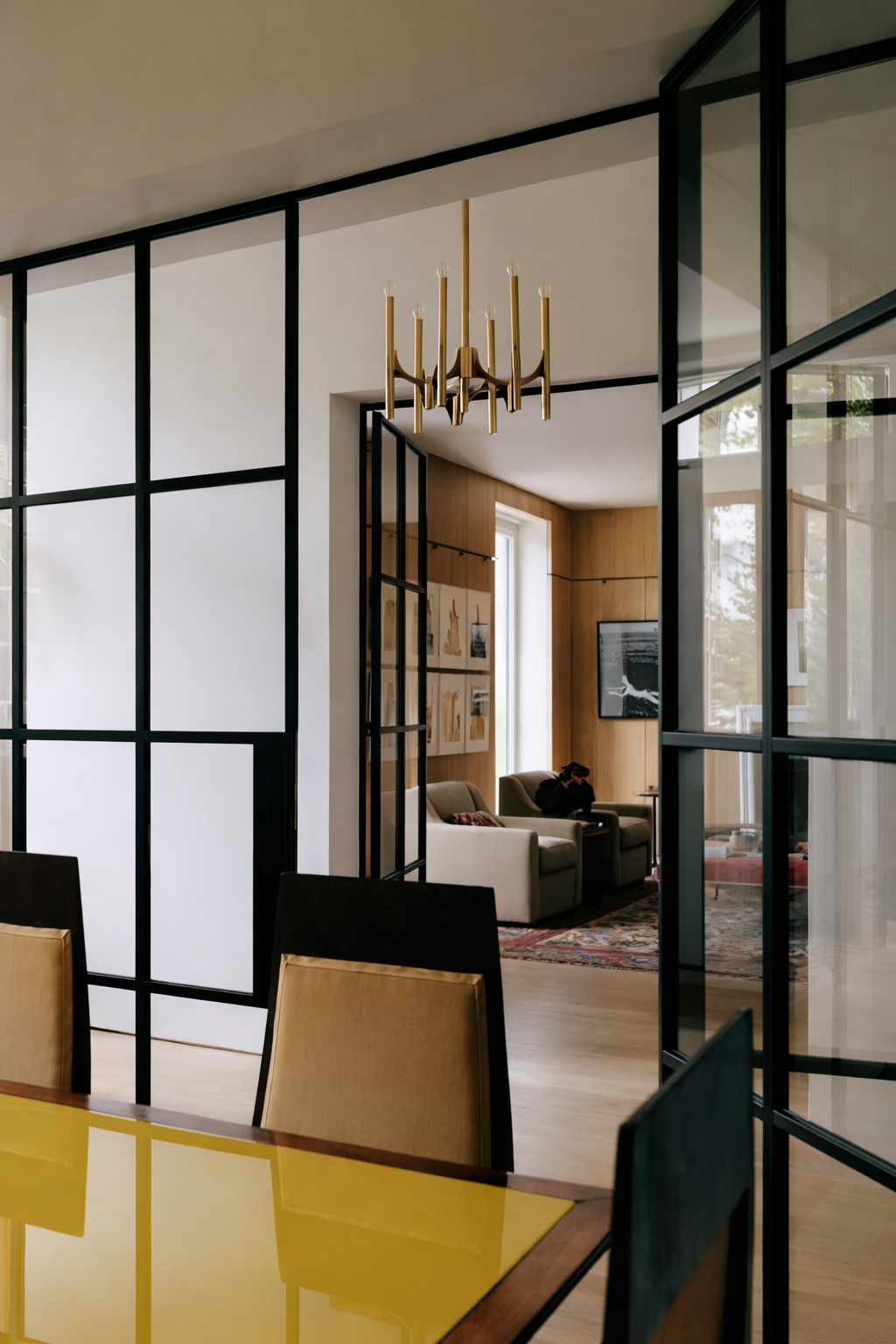
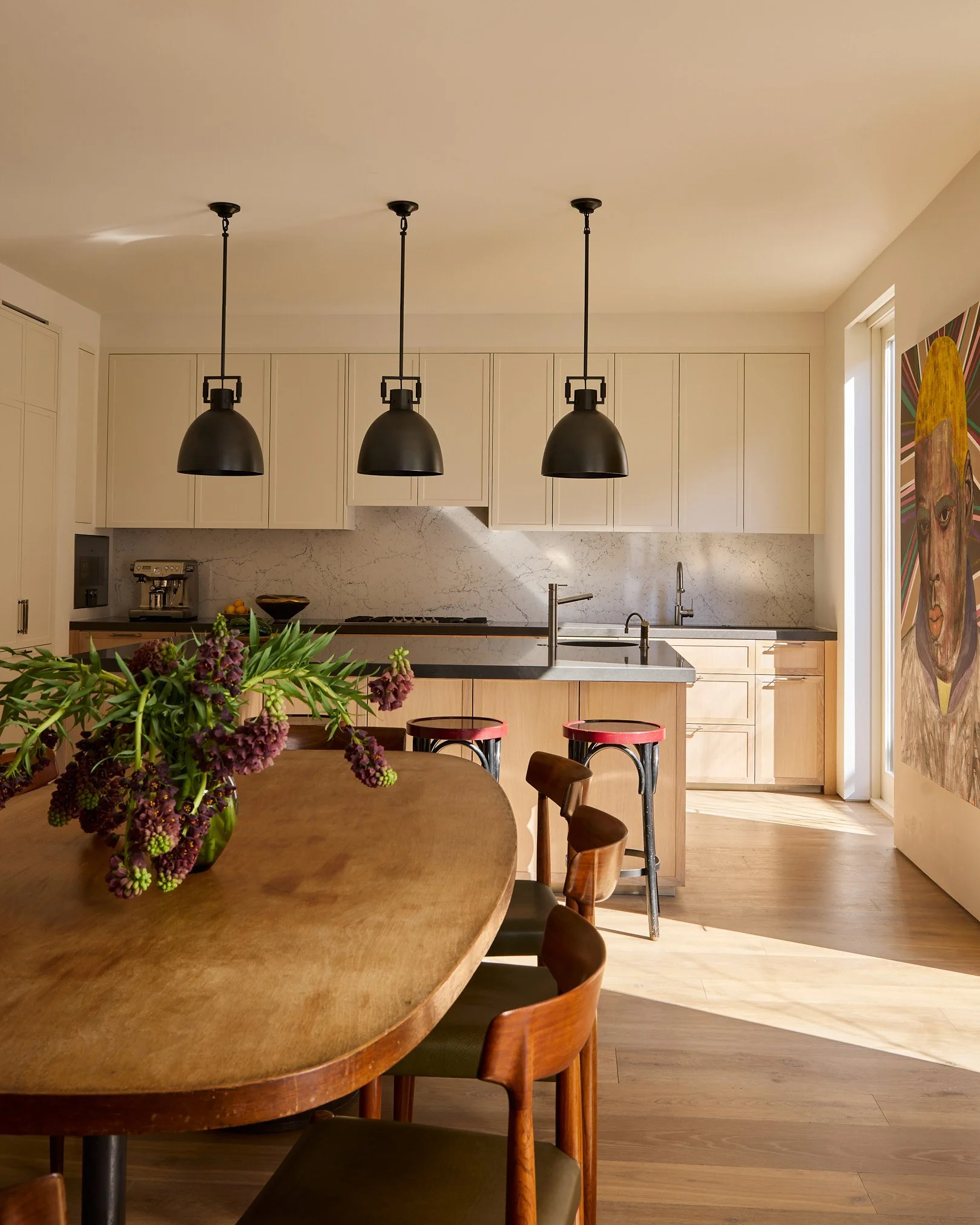
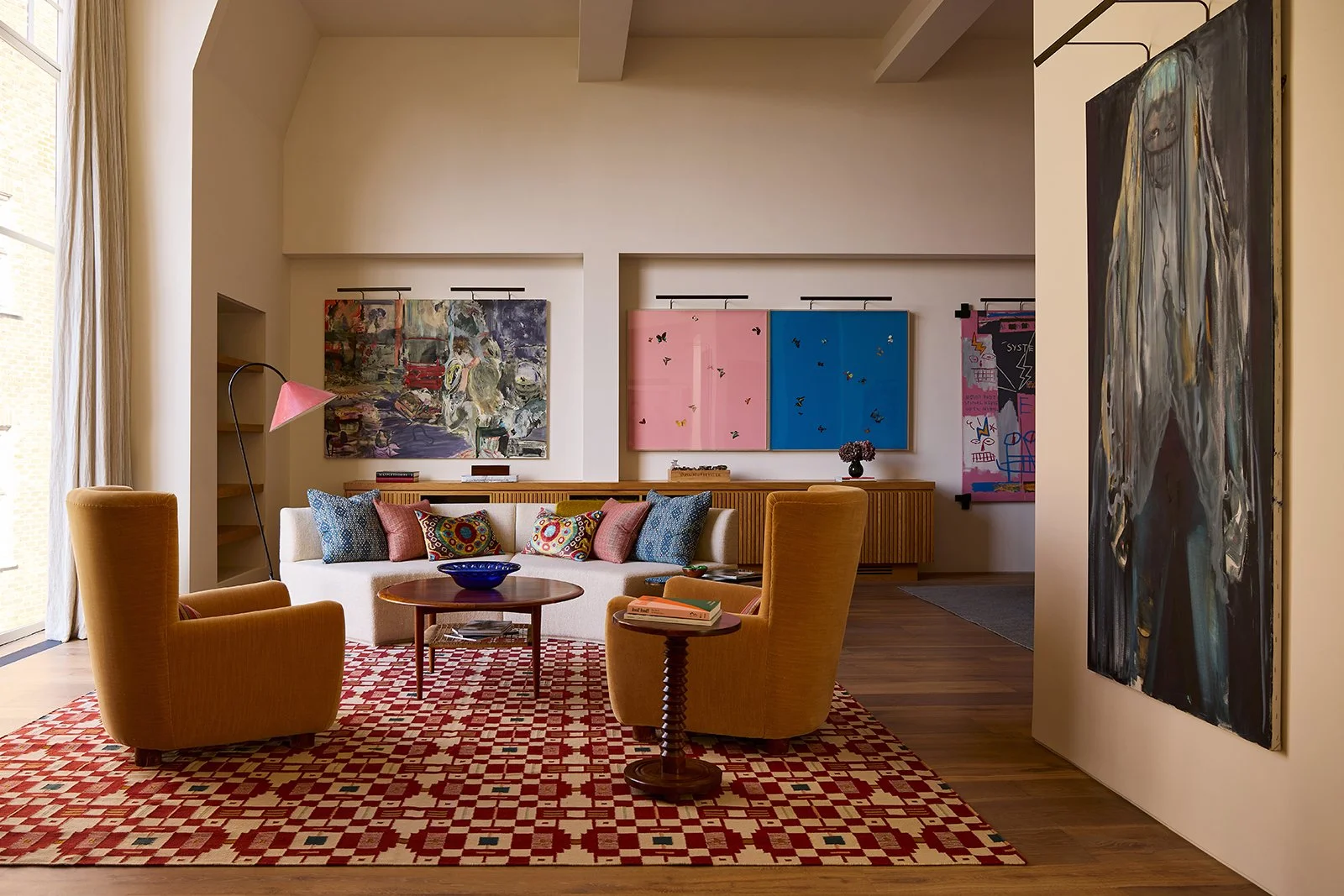
The focus of this second phase was on the ground floor and key living spaces, where we reworked the layout to create a clearer sequence of rooms, including a more defined entrance, dining area and family sitting room. The intention was to introduce a stronger sense of structure and rhythm, while maintaining the fluidity and light that characterise the house.
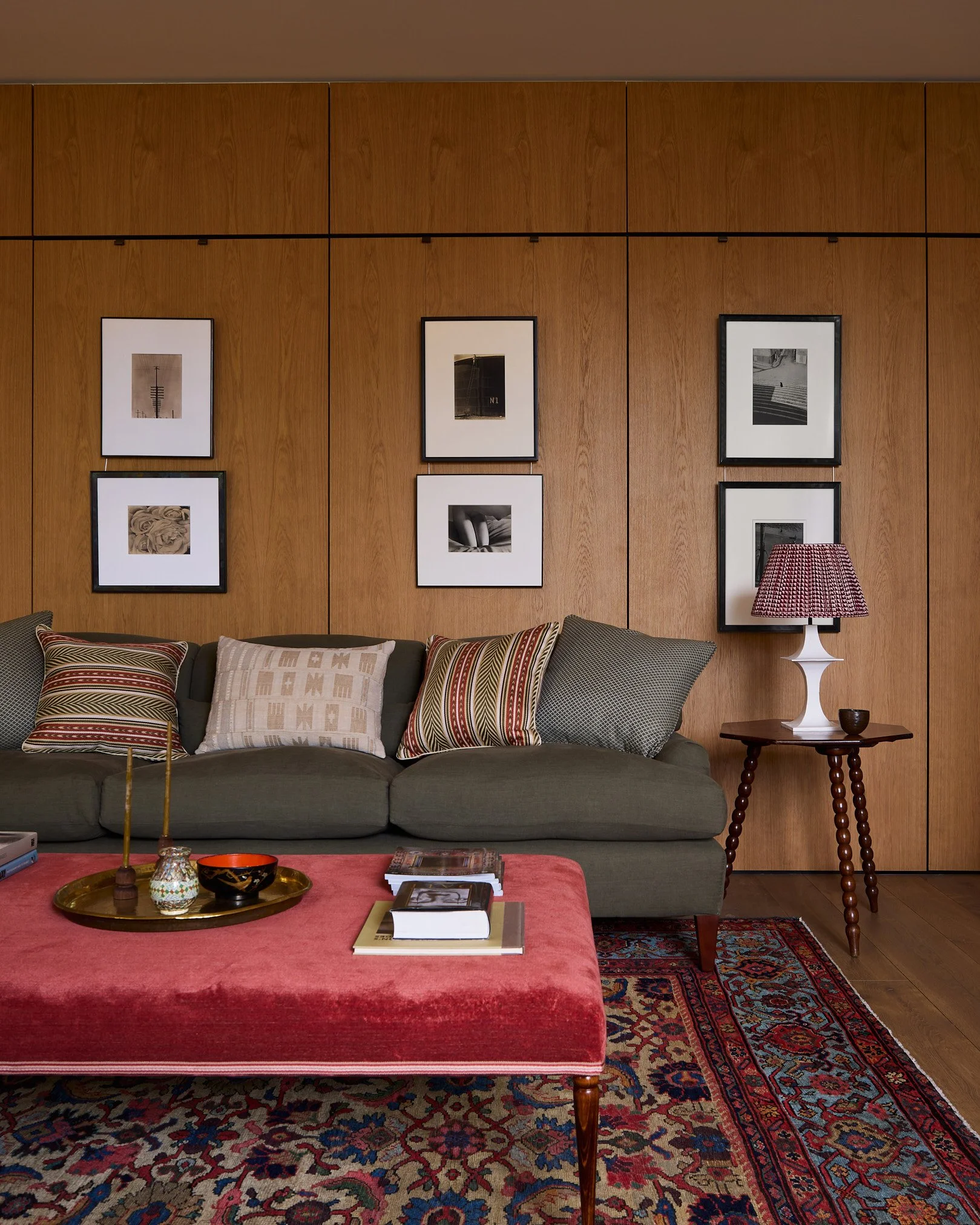
A central element of the project was the introduction of bespoke timber joinery, most notably the iroko wall cladding, which brings warmth and depth to the main rooms. This material language was developed as a subtle reference to Brazilian tropical modernism, reflecting the client’s background and their interest in mid-century Brazilian furniture. Rather than a literal interpretation, the influence is expressed through proportion, tactility and the relationship between architecture and furniture.
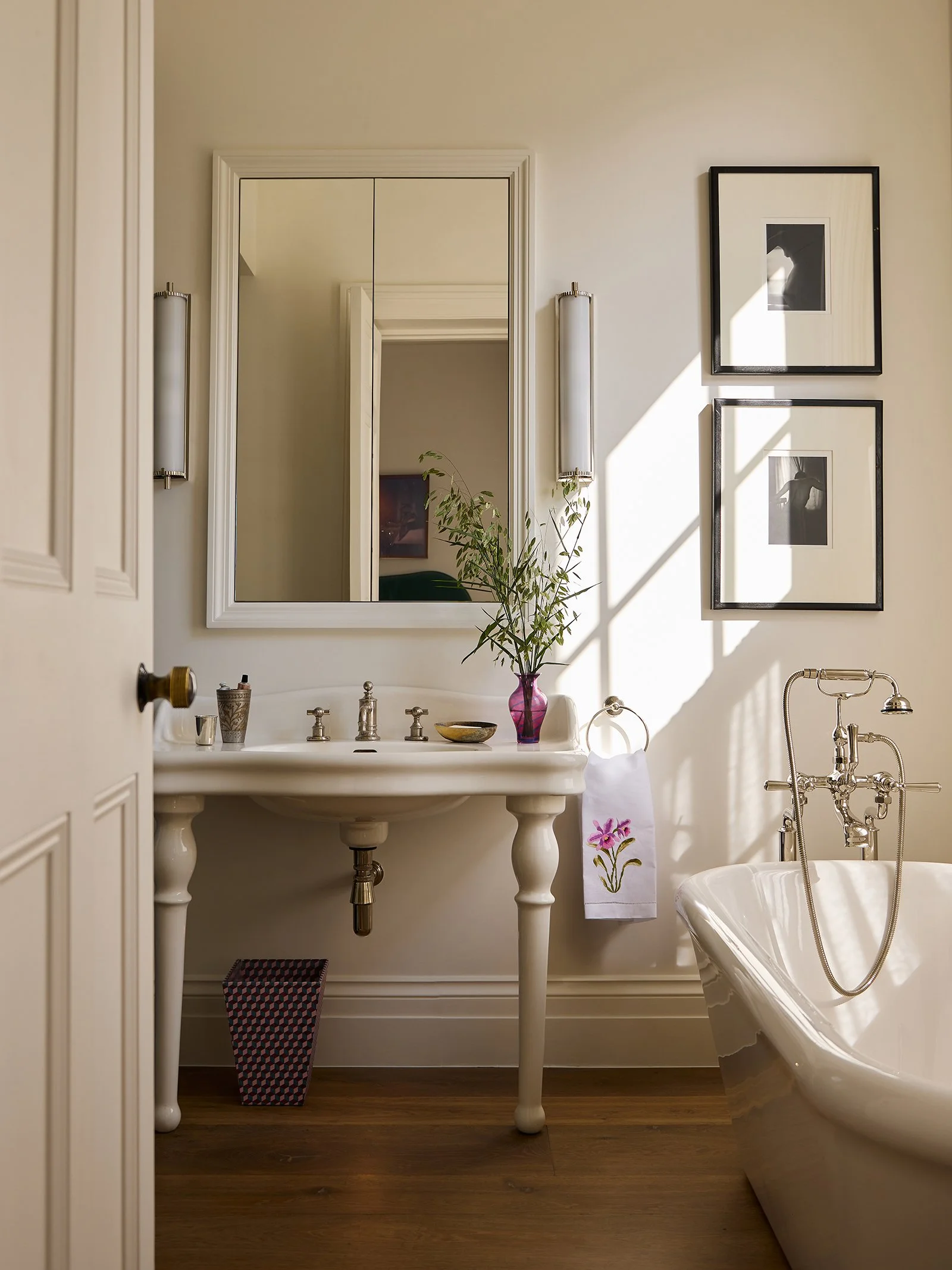
Throughout the house, the architectural interventions were conceived as a calm and consistent backdrop for the art collection, allowing it to remain the focal point while enhancing the spatial experience. Storage, lighting and spatial zoning were carefully integrated to support everyday living without compromising the clarity of the design.
The result is a layered interior where architecture, art and furniture coexist in balance — a continuation of the original vision, but with a greater sense of cohesion, warmth and identity.